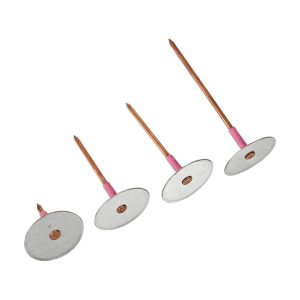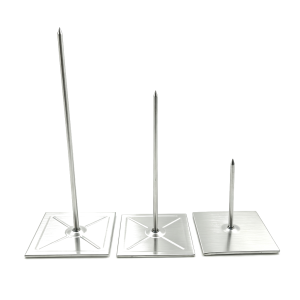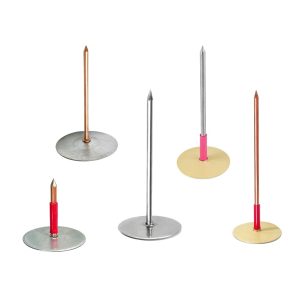
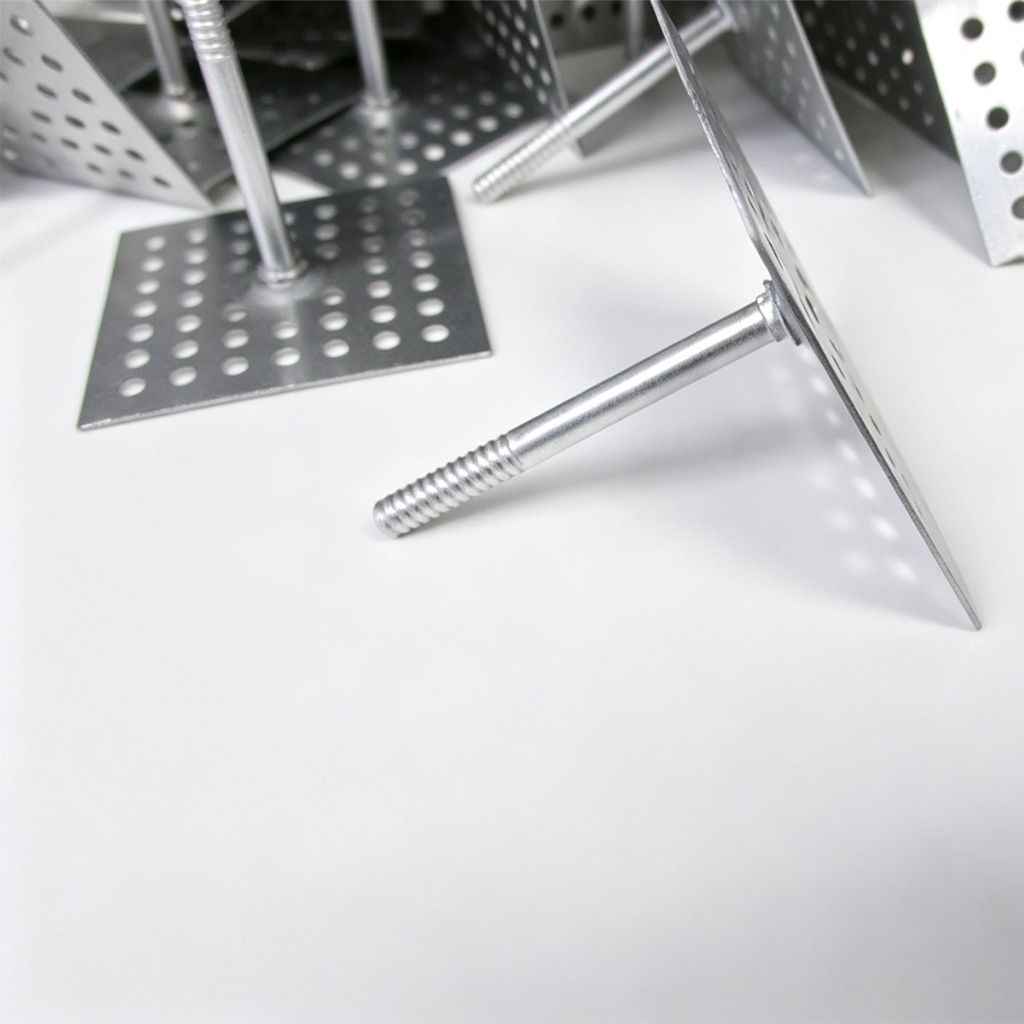
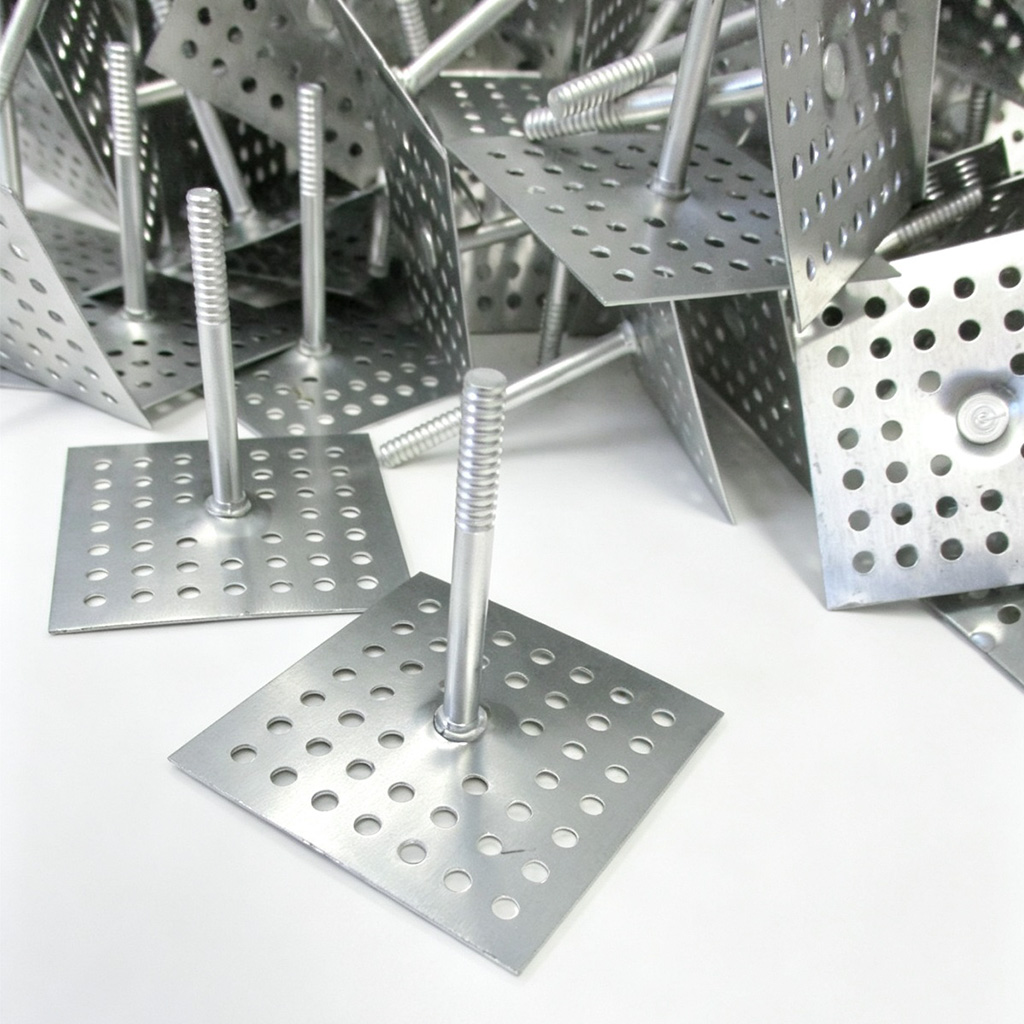
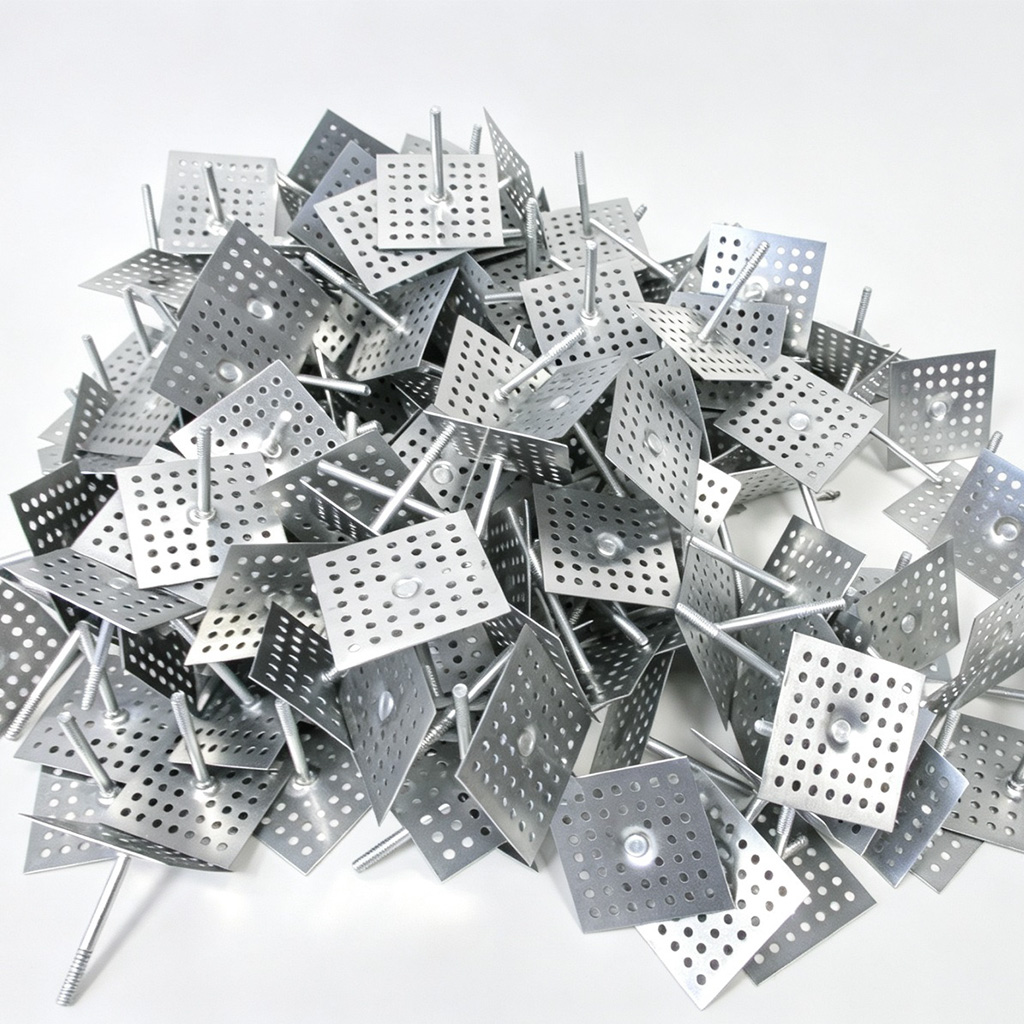
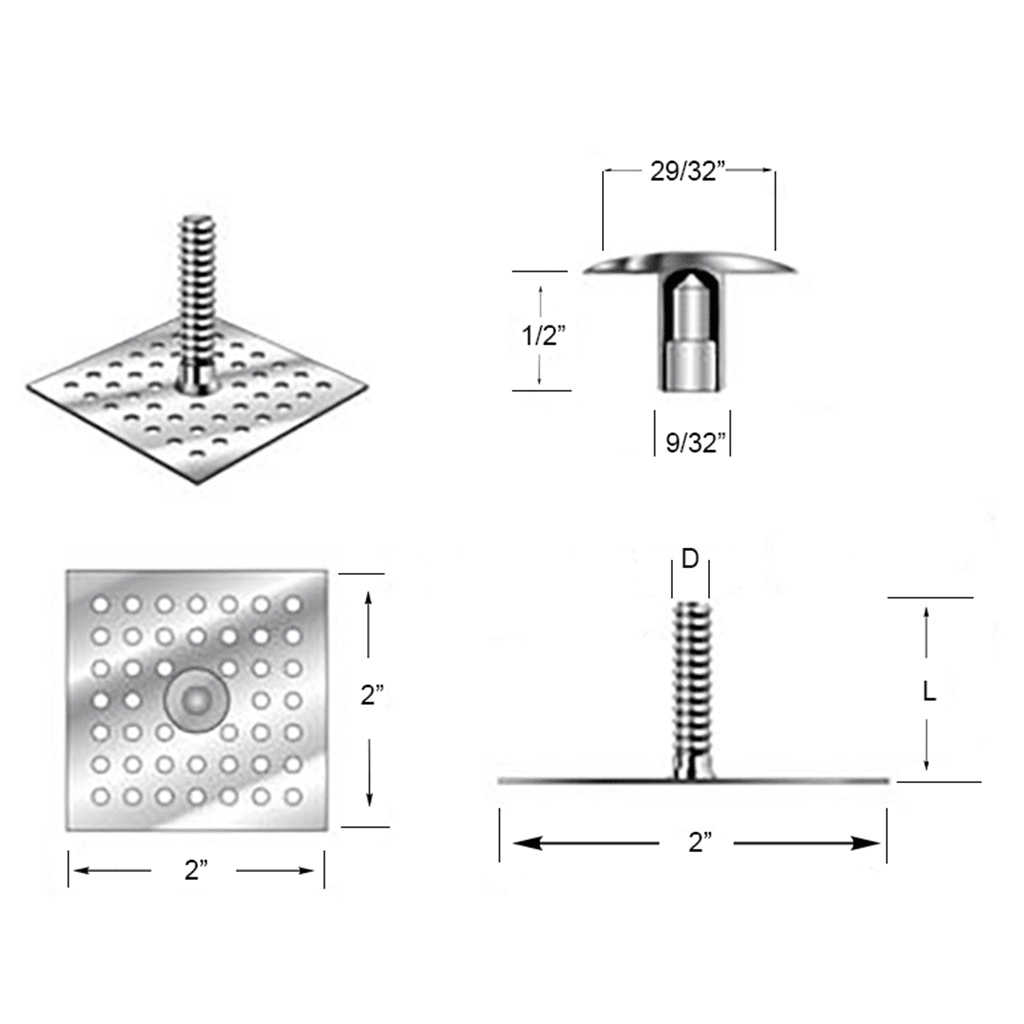
| Heavy-Duty Threaded Insulation Pins | |
| Pin Diameter | 12GA(3mm) |
| Baseplate | 2″(50mm) |
| Common Length | 1.2~8″(30~200mm) |
| Material | NAIL: Low Carbon Steel, galvanized/coated. (Copper coated, Aluminum, and Stainless Steel nails available on special order.) BASEPLATE: Low Carbon Steel, galvanized. |
| Surface Treatment | Galvanized |
| Package | According to your needs. |
| Accessories | Self-locking washers are available in a variety of sizes, shapes, and materials. |
| Remark | Special request could be customized. |
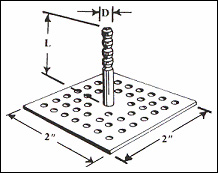
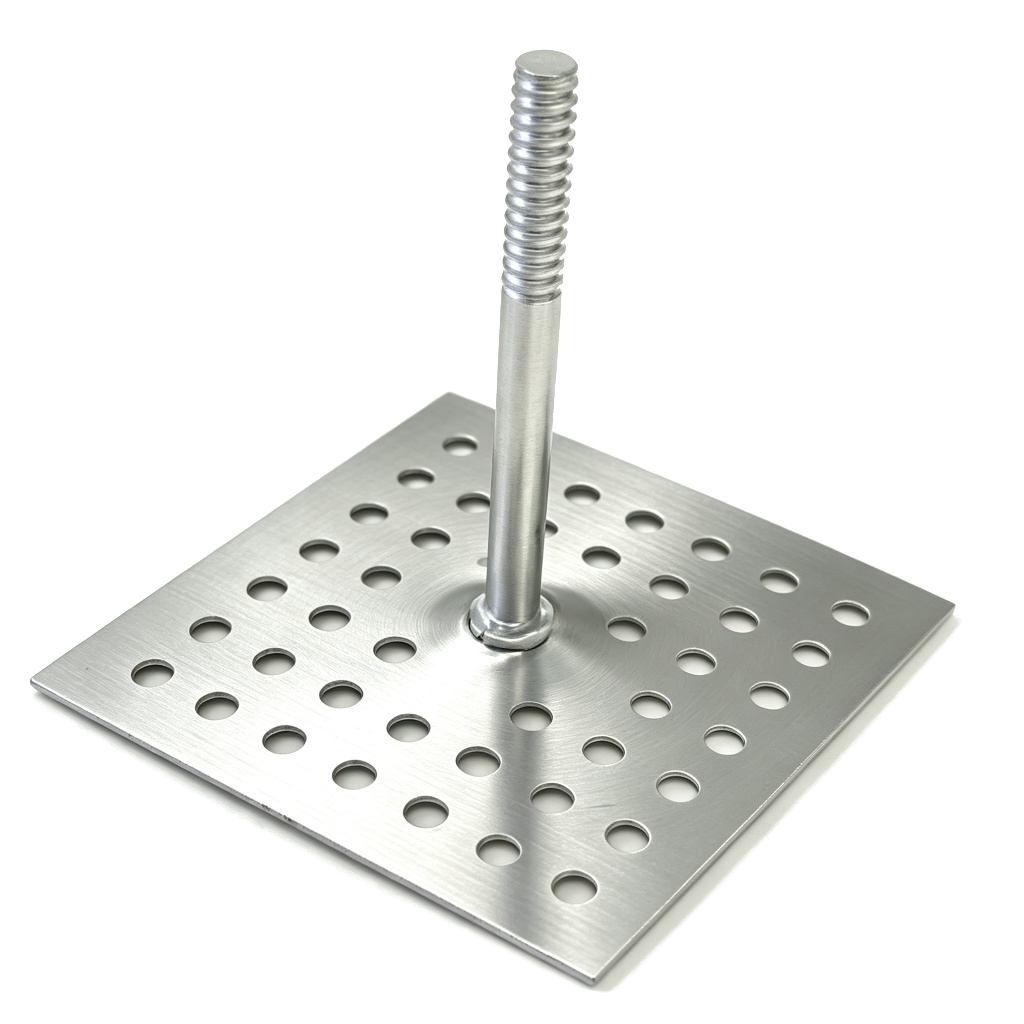
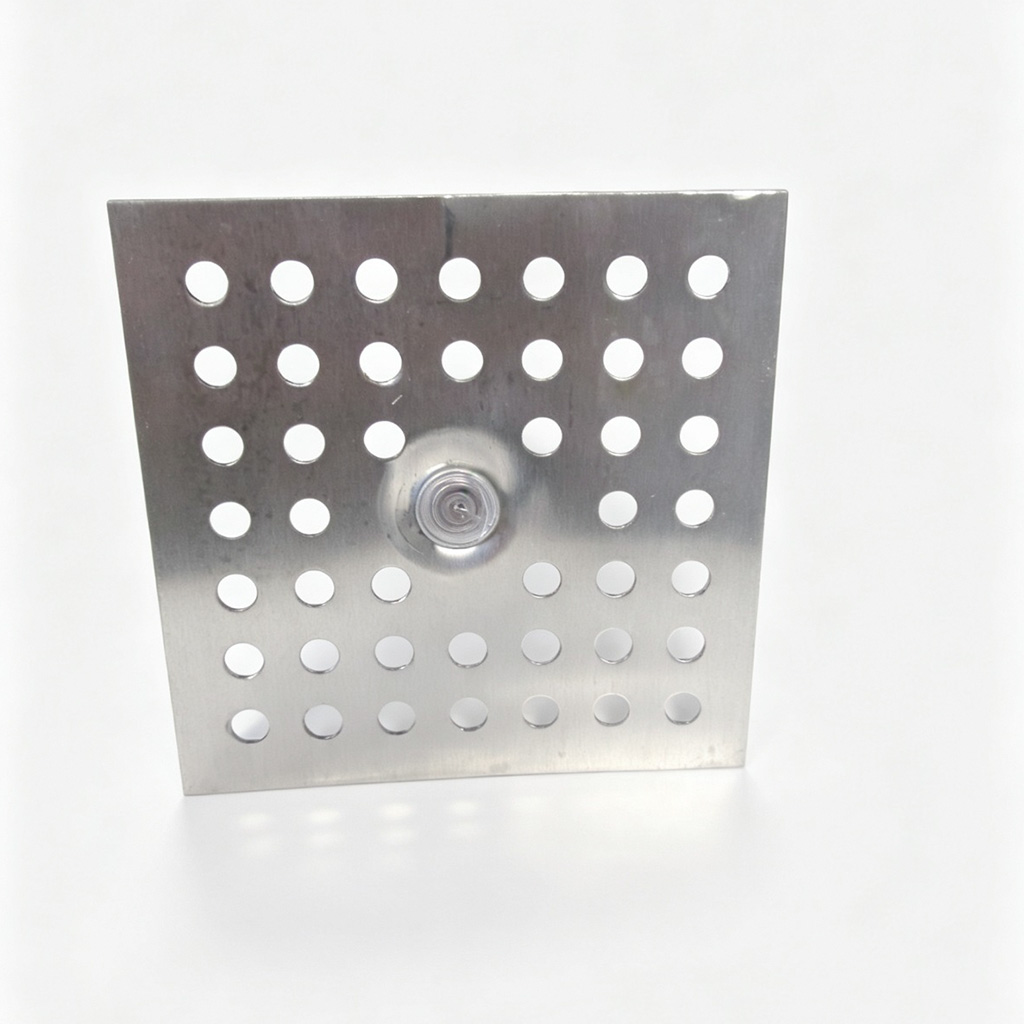
PERFORATED BASE
(ADHESIVE REQUIRED)
Application
-
Heavy-Duty Rockwool & Mineral Wool Fixing
Engineered to securely fasten high-density Rockwool and mineral wool boards. Our threaded insulation pins deliver exceptional pull-out resistance, preventing boards from peeling off under wind uplift or vibration—ideal for demanding HVAC and EWI projects. -
Steel & Wood Substrate Applications
The square perforated base offers superior stability on steel purlins and wooden rafters. The pre-drilled holes allow for adhesive injection for dual fixation, or provide convenient mounting points for cable ties and pipe clips, making these metal anchors highly versatile on-site. -
Cleanroom & Cold Storage Insulation
Manufactured from premium stainless steel (SUS304/316), these pins are rust-proof and contamination-free. They firmly grip cold storage walls, ensuring the thermal insulation layer remains intact despite severe freeze-thaw cycles, guaranteeing long-term energy efficiency and hygiene compliance.
Why does the “Threaded Shank” matter in insulation pins?
In standard insulation fasteners, the holding force often relies entirely on the friction between the pin and the drilled hole or the expansion of a plastic sleeve. Over time, thermal expansion and contraction can cause the pin to loosen.
Our Threaded Insulation Pins address this issue directly. The thread forms a mechanical interlock with the base material (steel, concrete, or dense wood). This mechanical interlock is significantly more reliable than friction-based fixing. It provides exceptional resistance to wind uplift, gravity pull-down, and structural vibration, making it the preferred choice for Tier-1 construction contractors globally.
Technical Guide: Threaded vs. Smooth Insulation Pins – Which One Should You Choose?
| Selection Criteria | 🔴 Threaded Pin (Recommended for) | 🔵 Smooth/Plain Pin (Recommended for) |
| Best Substrates | Steel structures, Hardwood, High-density & high-strength concrete | Standard concrete, Brick/Masonry walls, Wooden framing |
| Installation Method | Screwing in with electric drills or rotary tools | Shooting with powder-actuated tools or direct hammering |
| Pull-out Strength | ⭐⭐⭐⭐⭐ Excellent – Threads provide maximum mechanical resistance | ⭐⭐⭐ Good – Relies on friction or expansion plugs |
| Vibration & Fatigue Resistance | ⭐⭐⭐⭐⭐ Excellent – Locks firmly without loosening | ⭐⭐ Fair – Slight loosening possible under long-term wind pressure or thermal cycling |
| Installation Speed | ⭐⭐ Moderate – Requires slow, precise alignment and locking | ⭐⭐⭐⭐⭐ Extremely Fast – One second per point |
| Unit Cost | Higher – Complex manufacturing, more materials used | Lower – Mass production, highly cost-effective |
| Re-work & Repair Difficulty | Difficult – Hard to remove without damaging the substrate once screwed in | Easy – Can be pulled out and repositioned easily if mis-shot |
Final Decision: Maximizing Insulation Efficiency
Whether you need the unparalleled holding power of our Threaded Metal Insulation Anchors for critical structural applications, or the fast-laydown convenience of our Stainless Steel Smooth Insulation Pins for general building envelopes, our factory provides customized solutions for every project. As a leading manufacturer of non-standard insulation fasteners, we support both OEM and ODM requirements. Not sure which pin fits your drawing? Contact our technical team for a free professional site assessment and product recommendation!