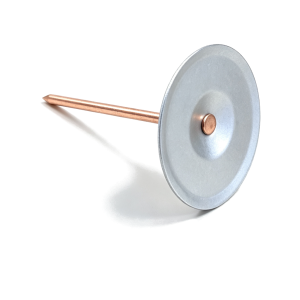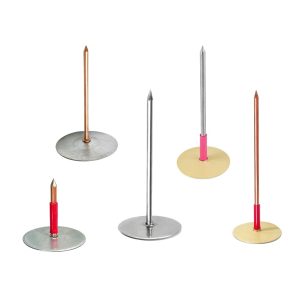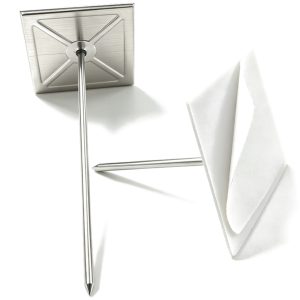
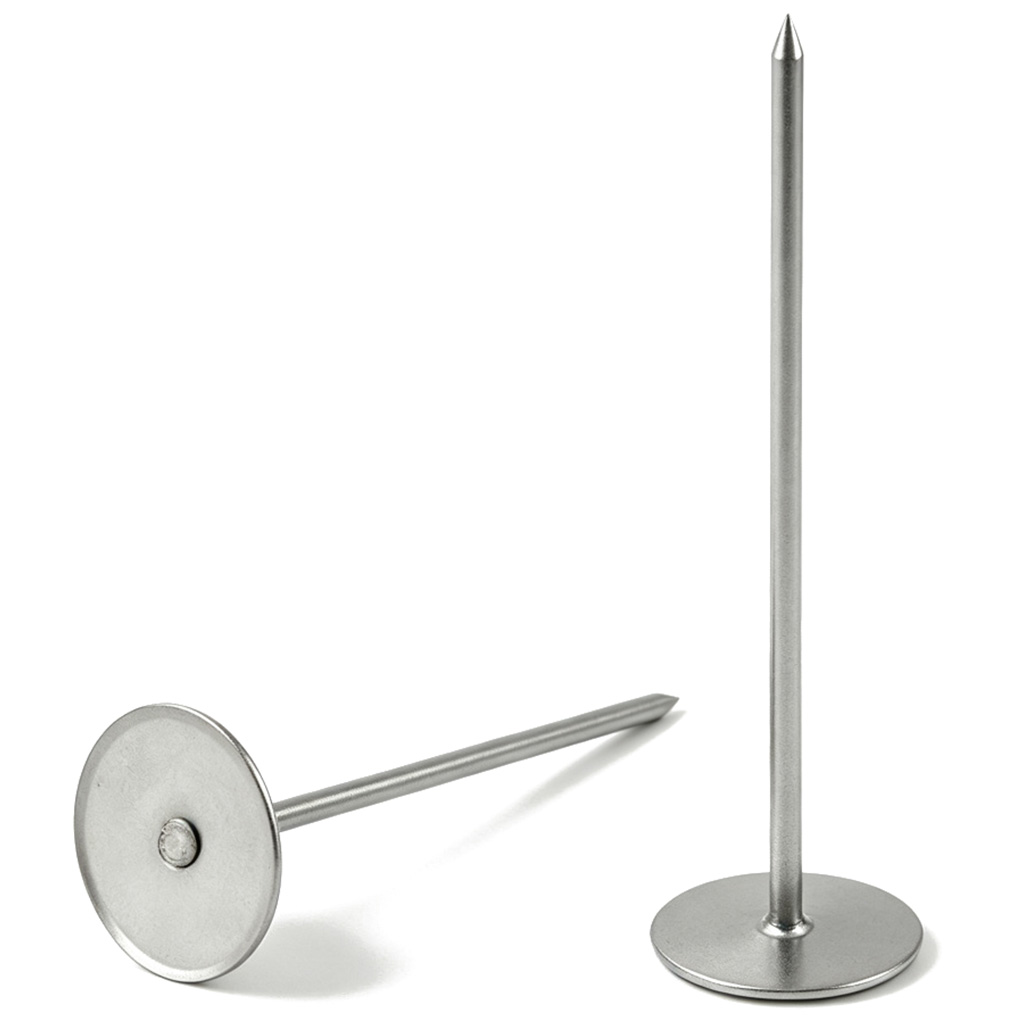
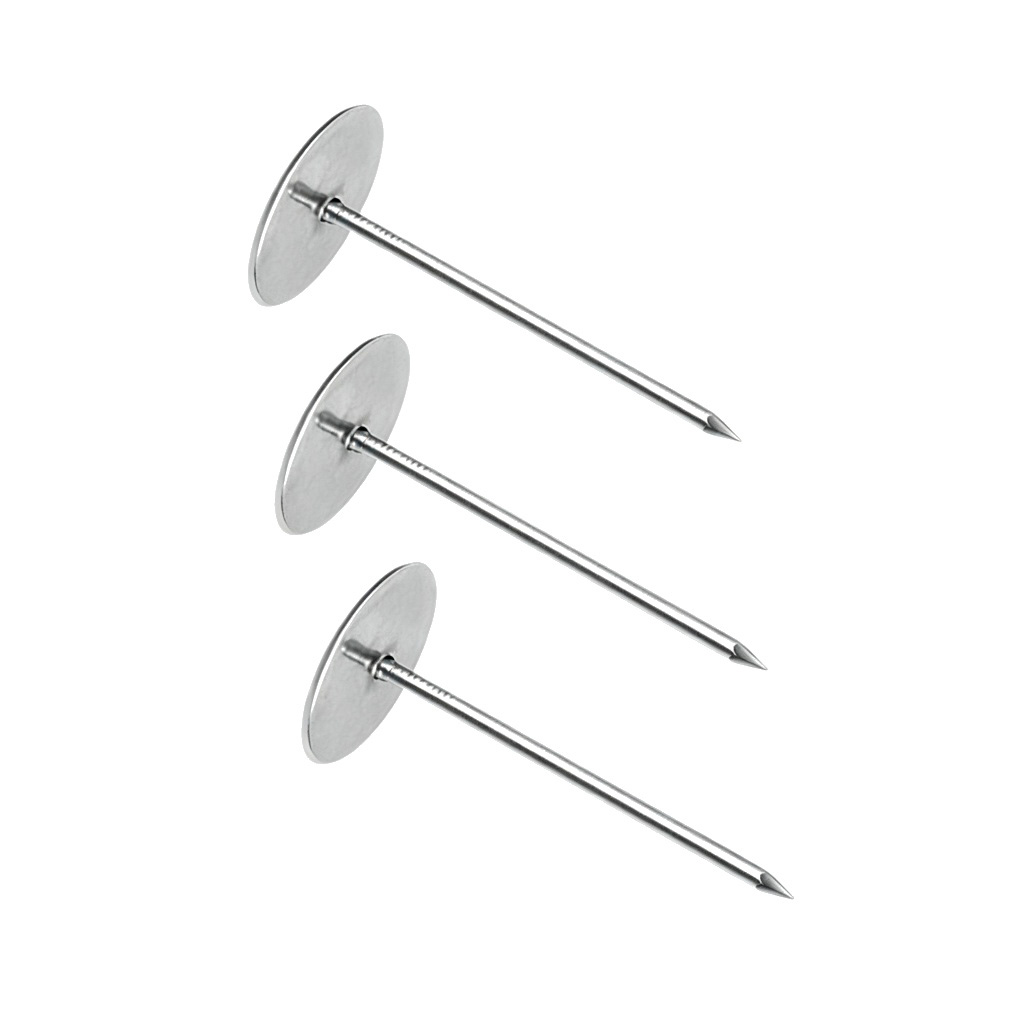
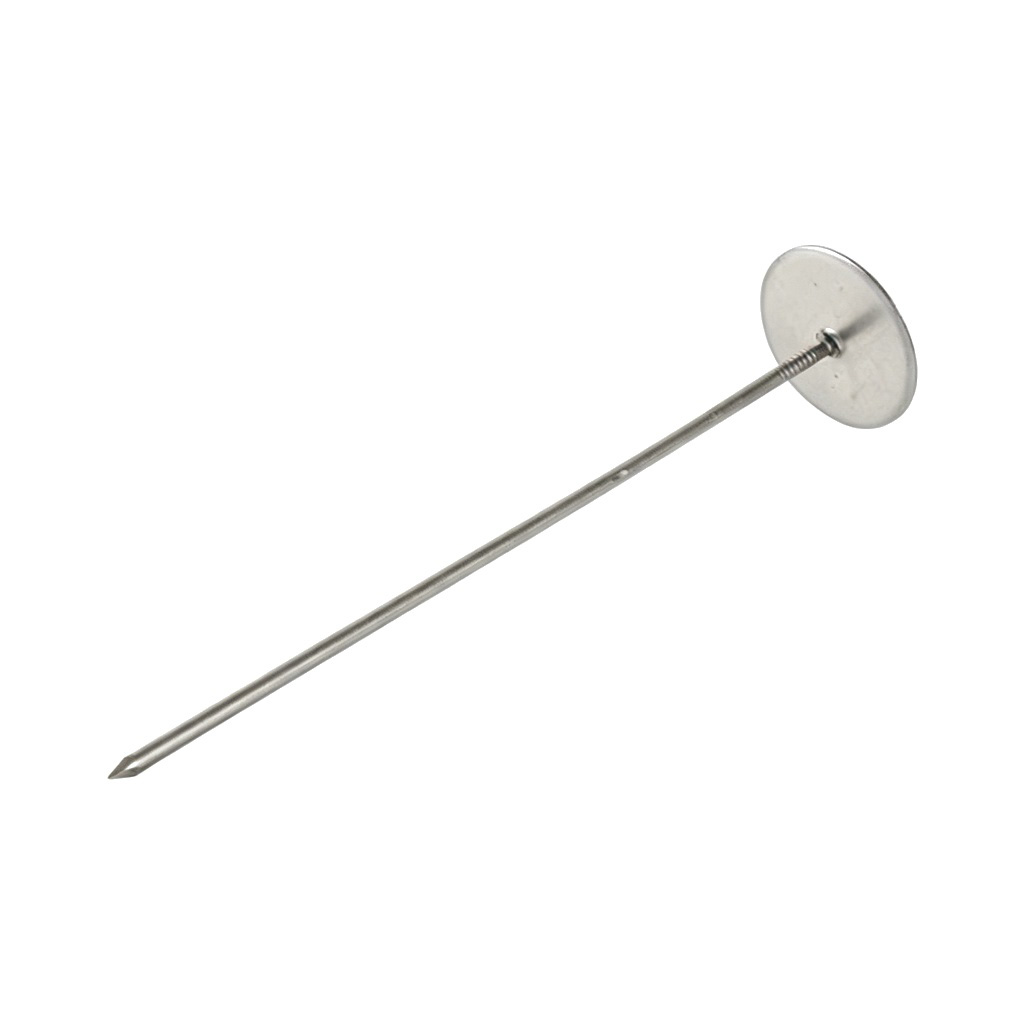
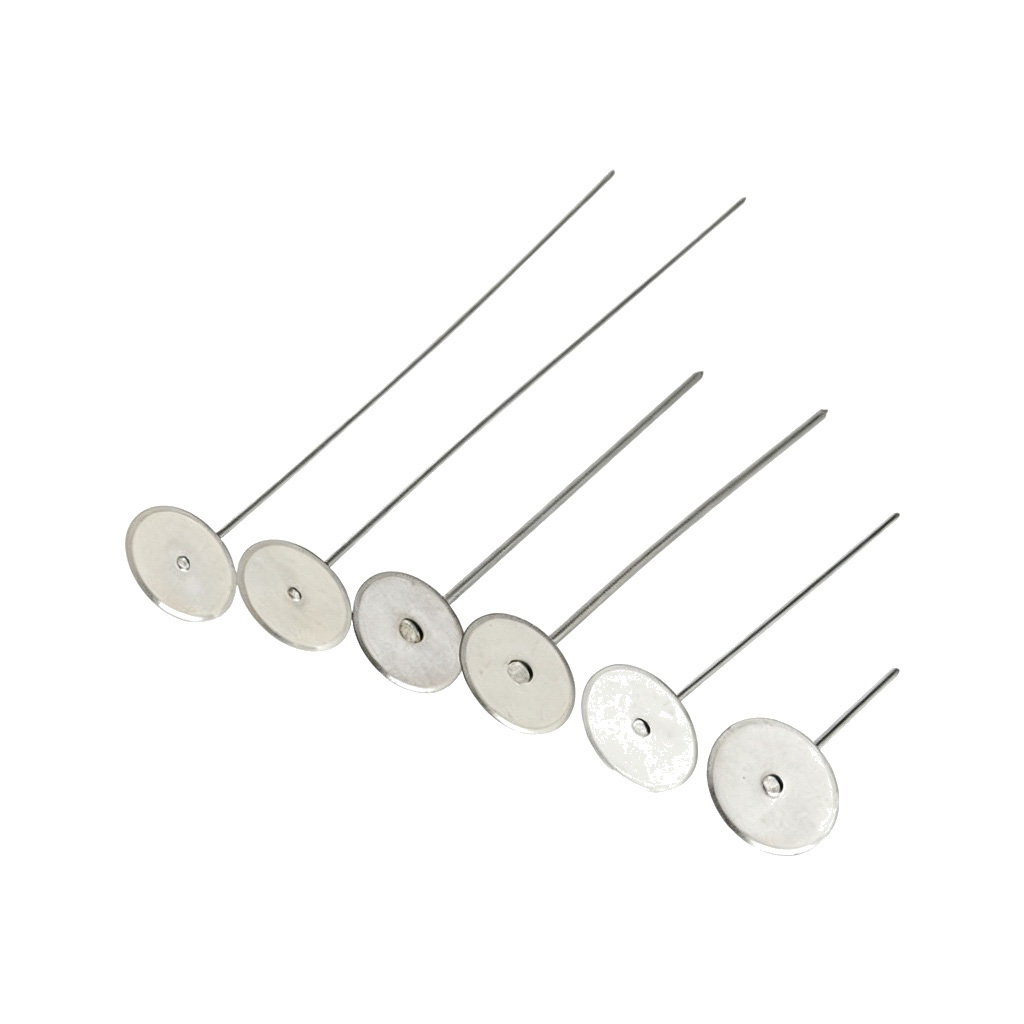
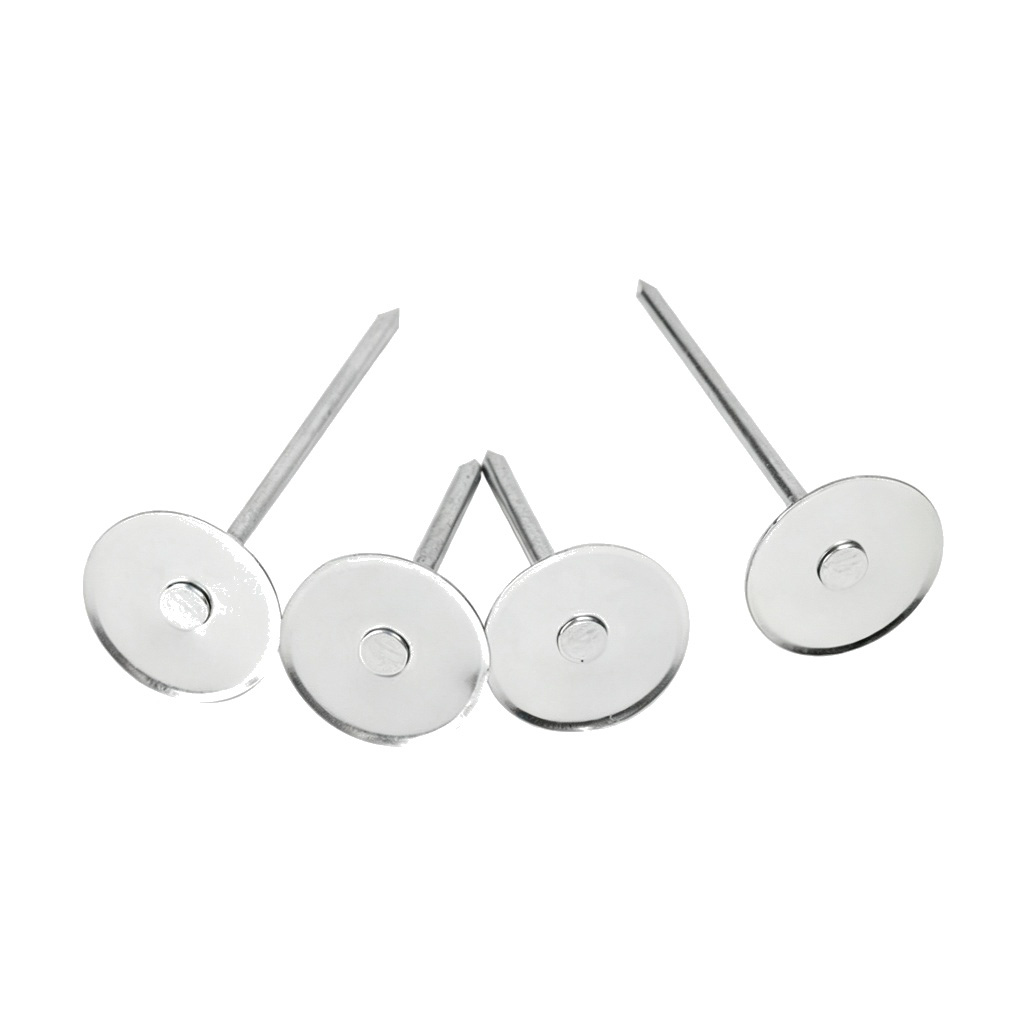
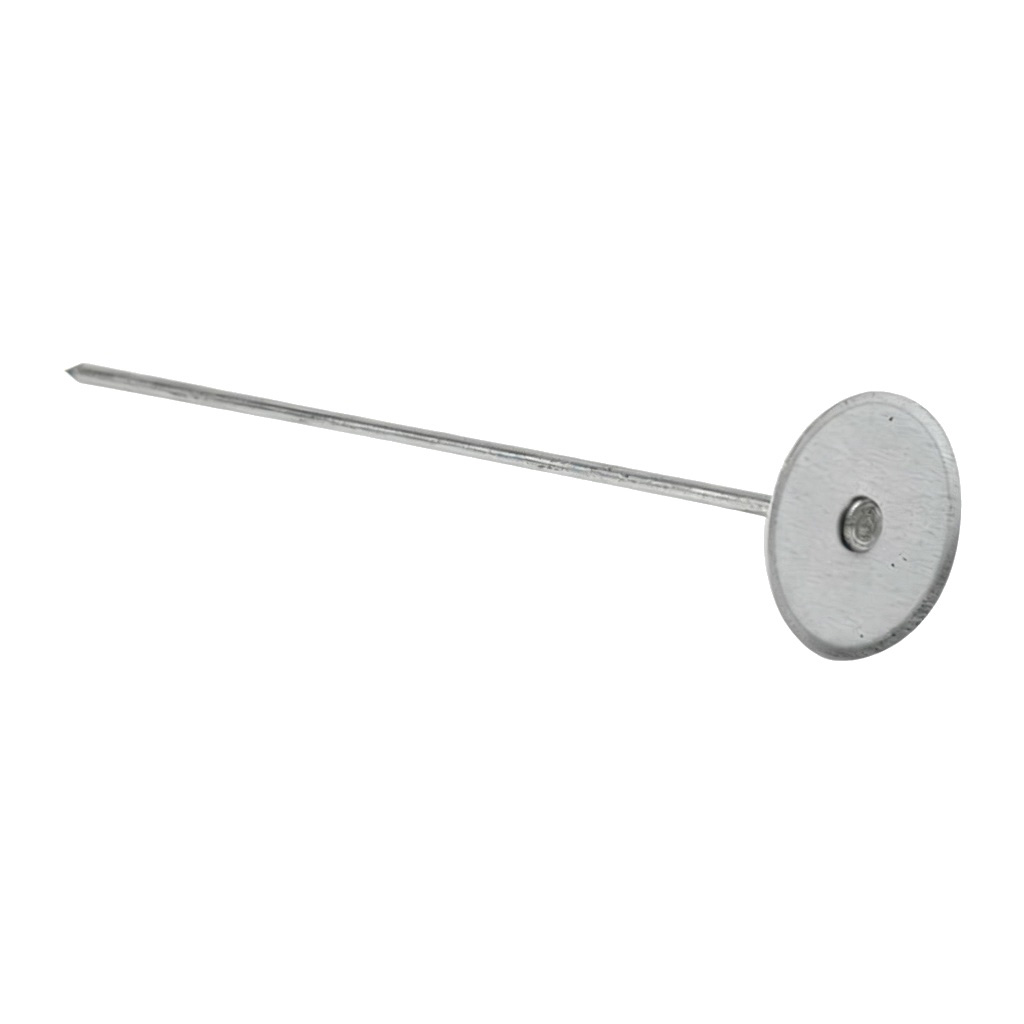
Engineered for secure, high-strength insulation fastening. Our quilting pins feature a cupped head and precision-welded construction, designed to anchor insulation within removable blankets and secure it to HVAC sheet metal, ensuring long-term thermal and acoustic performance.
| Insulation Quilting Pins | |
| Pin Diameter | 12GA/14GA |
| Base Diameter | 30mm |
| Pin Length | 2.5″/4.5″ |
| Material | 304/306 Stainless Steel, Galvanized Steel, Copper Plated |
| Package | According to your needs. |
| Accessories | Self-locking washers are available in a variety of sizes, shapes, and materials. |
| Remark | Special request could be customized. |
Key Features:
Insulation quilting pins, also known as cupped head insulation pins, are critical components in both permanent and reusable insulation systems. They are primarily used to provide support and prevent insulation materials from settling or sliding within fabricated blankets and covers. Additionally, they can be applied with a capacitor discharge stud welder to permanently secure insulation to ductwork and other HVAC sheet metal configurations.
-
Reliable Insulation Support: Designed to anchor insulation within removable blankets, ensuring uniformity and preventing the insulation from sagging or shifting over time.
-
Dual Functionality: While commonly used as a hookless lacing anchor for fabricating blankets, these pins also serve as a weld pin for permanent attachment to metal surfaces.
-
Corrosion-Resistant Materials: Manufactured from high-grade 304/316 stainless steel or galvanized steel, providing superior resistance to oxidation, rust, and chemical corrosion in harsh environments.
-
Precision Engineering: Available in standard 12 Gauge (2.7mm) and 14 Gauge (2.0mm) pin diameters with sharp tips for easy penetration through insulation without excessive damage.
-
Versatile Length Options: Standard lengths of 1″, 1-1/2″, 2-1/2″, and 4-1/2″ accommodate various insulation thicknesses, with custom lengths available upon request.
Application – Stainless Steel Quilting Pins
Ideal for permanent insulation fixing in harsh or hygiene-sensitive environments:
-
Offshore platforms and shipboard insulation systems
-
Coastal buildings and exterior wall insulation
-
Food processing and pharmaceutical clean rooms
-
High-temperature industrial equipment and boiler cladding
-
Outdoor piping and storage tank insulation
Application – Plated Quilting Pins
A budget-friendly choice for dry indoor conditions:
-
HVAC air duct internal/external lining
-
Commercial building interior wall insulation
-
General machinery and equipment insulation (non-corrosive environments)
Tips:
Ensure the base sits flat against the insulation surface before final securing. For stainless steel pins, bending may require more force – use proper pliers. For plated pins, avoid scratching the coating during bending to preserve rust resistance.
FAQ
-
What is the difference between quilting pins and lacing anchors?
Quilting pins are typically used as hookless fasteners to secure insulation inside blankets, while lacing anchors feature a hook for lacing wires. However, quilting pins can also serve as weld pins for permanent attachment. -
What pin length should I choose for my project?
The pin length should be slightly longer than the insulation thickness to allow for the self-locking washer to be placed and secured. Standard lengths range from 1″ to 4-1/2″. -
Are these pins suitable for high-temperature applications?
Yes, our stainless steel quilting pins are designed to withstand elevated temperatures and provide durable, long-term fixings in demanding industrial environments. -
Can I place a custom order?
Yes. Please contact our sales team with your specific requirements, and we will do our best to accommodate them. -
Do you provide samples? How can I get one?
Yes, samples are available. Please reach out to our sales team with your sample request, and we will arrange shipment promptly.
Customization:
We support full OEM/ODM services. Please contact us for custom pin diameters, lengths, and material grades to perfectly match your specific project requirements.